


A US Supreme Court decision expanding ‘reasonable suspicion’ authority is pushing immigration enforcement beyond job sites into rural towns, where a US citizen says an officer told him: ‘We have the right to assume that you’re an illegal alien’
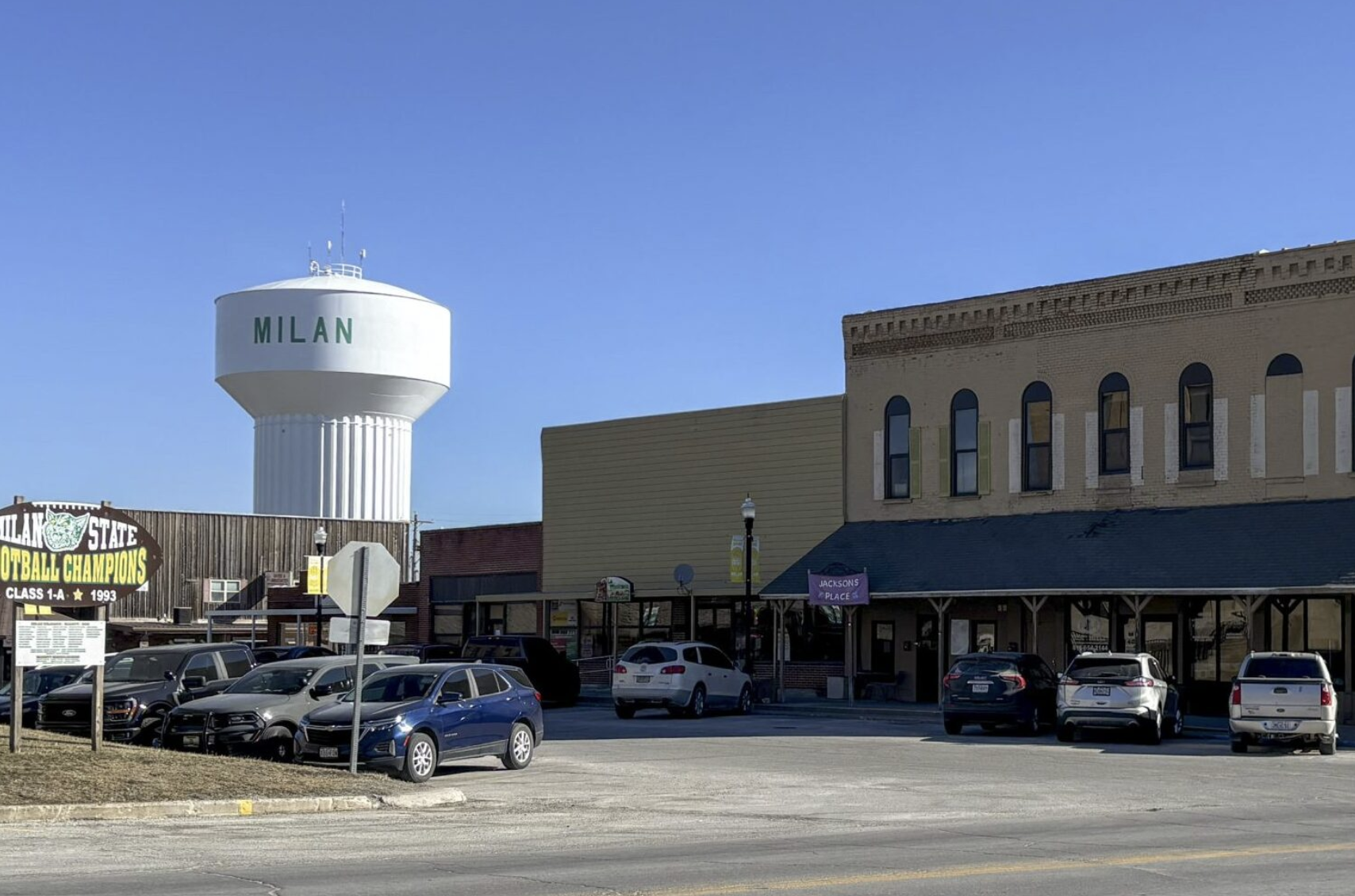
Eliseo Affholter noticed a car following him, moving slowly as he walked through the streets of Milan.
Walking was his wind-down routine after work at a Kraft Heinz plant, where on Feb. 24, he had just finished a 12-hour overnight shift.
As he walked along East Grand Avenue, he saw flashing lights and vehicles lined up behind a stopped car, including patrol cars, an SUV and a pickup truck.
As Affholter stepped closer, he raised his phone to record.
One agent identified himself as an officer with U.S. Immigration and Customs Enforcement (ICE) and asked in Spanish what country Affholter was a citizen of. “From here,” Affholter replied.
“Do you have papers? …Are you legally in the United States?” the agent asked, as two others stood nearby.
He stopped recording when an officer grabbed the phone from his hand, according to Affholter.
When he asked why he was being detained, he said one agent responded in English: “We have the right to assume that you’re an illegal alien.”
That same day, federal immigration agents arrested three people in Milan, including two men from Senegal and another from Guatemala.
Over the past year, President Trump’s deportation campaign has reached deep into agricultural regions that rely heavily on immigrant labor, including raids on farms and at meat-packing facilities.
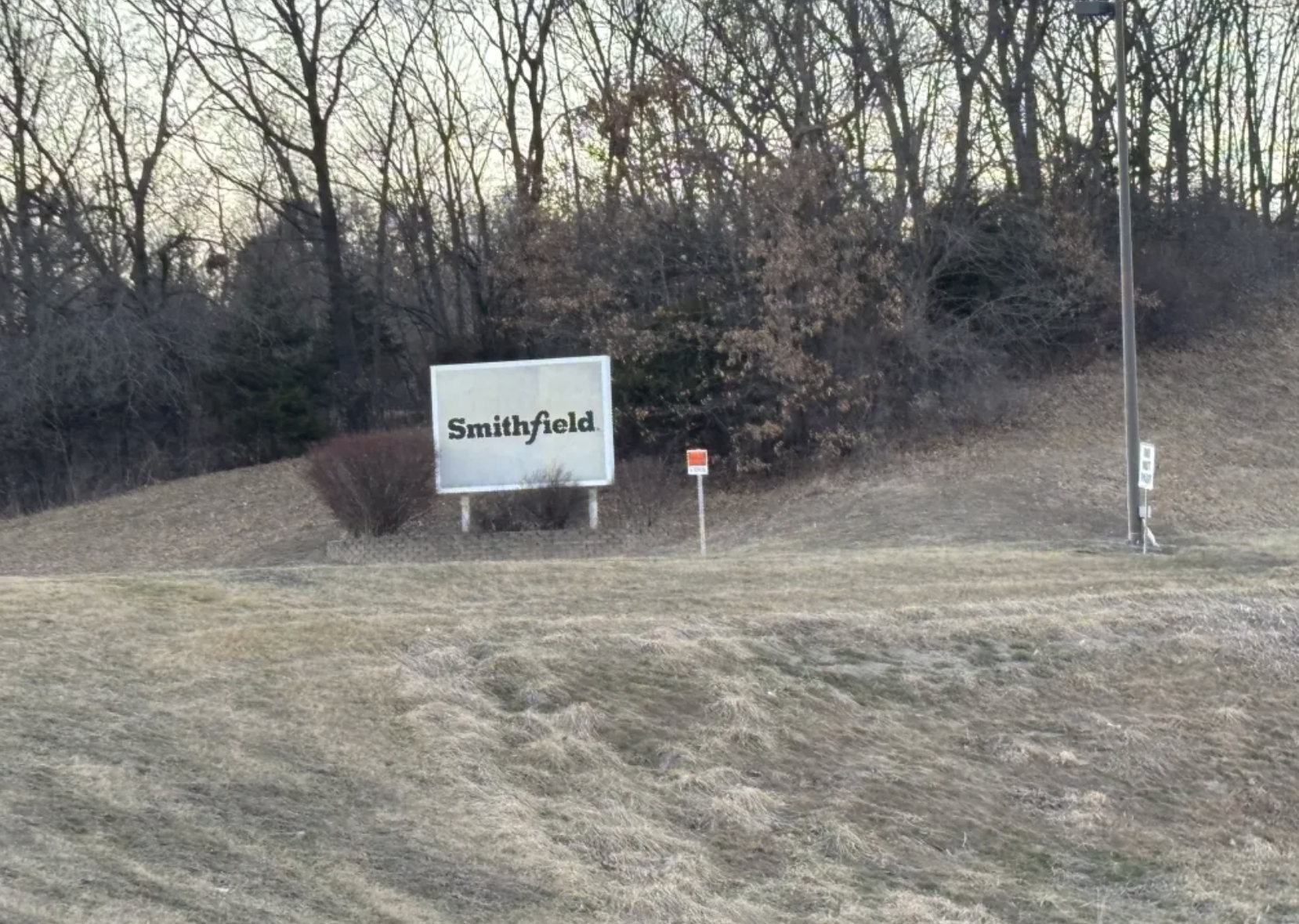
Milan, a north Missouri town of about 1,800, is home to a large Smithfield Foods pork processing plant. The Kraft Heinz plant, where Affholter worked, is 33 miles east in Kirksville.
But the February arrests in Milan did not take place inside the local meatpacking plant; they occurred along nearby roads and in residential areas where workers live and travel to and from their shifts.
“They may not be going into the plant, but they’re in the community,” said Axel Fuentes, executive director of the Rural Community Workers Alliance, a worker advocacy organization that supports immigrant and refugee food industry workers in rural Missouri.
Any immigration enforcement expansion within agricultural communities could have been aided by a September 2025 U.S. Supreme Court decision that broadened the scope of what agents can consider “reasonable suspicion.” Arrests appeared to increase after the decision, which allowed agents to consider a mix of factors, including apparent race or ethnicity, language or accent, location, and type of work, when making stops.
“Some would say that the Supreme Court, in effect, encouraged ICE to engage in racial profiling in immigration enforcement,” said Kevin R. Johnson, a law professor at the University of California, Davis School of Law. “The truth of the matter is, I think that’s accurate.”
Johnson said such practices have long been permitted under Supreme Court precedent. In a 1975 decision, United States v. Brignoni-Ponce, the Supreme Court ruled that immigration agents cannot stop someone based solely on “Mexican appearance,” but may consider it as one factor among others.
Affholter, 36, is a U.S. citizen of Maya descent, born in Guatemala. He arrived in the United States at 13 and was later adopted by a white American man. He has lived here for most of his life.
In a statement, an ICE spokesperson said Affholter “deliberately interfered” with a federal operation and “verbally” assaulted agents, prompting officers to question him about his immigration status and request identification.
“I feel like I’m an animal, like I’m worthless,” Affholter said. “Like I don’t deserve to be here… because of my skin color, because of the language I speak. I speak Spanish, English and Mayan.” Affholter was referring to Mam, an Indigenous Mayan language spoken in the western highlands of Guatemala and the state of Chiapas, Mexico.
Across Milan, residents told Investigate Midwest that there is fear immigration enforcement will not only target workplaces but also neighborhoods and streets.
In the first months of his presidency, Trump sent federal agents to farms and agricultural operations, drawing backlash from some supporters who said the actions made it harder to hire undocumented workers, who make up 44% of all farm workers, according to U.S. government surveys.
Trump announced a temporary pause on raids in the agriculture and meat-processing sectors, only to reverse the decision days later.
By early February 2026, more than 68,000 immigrants were being held in ICE detention nationwide, according to the Transactional Records Access Clearinghouse at Syracuse University. Most were arrested by ICE, and nearly three-quarters had no criminal conviction, often only minor offenses like traffic violations.
Although there is no publicly stated directive establishing a formal shift in strategy, advocates and residents say enforcement is increasingly occurring outside plants.
“Since last year, we’ve seen arrests following routine court appearances, such as for traffic violations, where people are then transferred into federal custody,” Fuentes said.
A family divided and displaced
One of the people arrested by ICE in Milan was Victorino Martínez-Chávez, 46, a Guatemalan national, who worked a cleaning shift at the Smithfield meat-processing plant, the town’s largest employer, according to state workforce data.
In a statement, an ICE spokesperson said Martínez-Chavez, who had previously been deported, was arrested during a targeted enforcement operation and had “refused to obey lawful commands to exit his vehicle, threatening officer safety and forcing officers to remove him from the vehicle.” The spokesperson added that Martínez-Chavez had previously been deported and reentered the United States, which is a felony offense.
Affholter’s video of the arrest, which was reviewed by Investigate Midwest, shows the driver’s side window of Martínez-Chávez’s vehicle already broken when ICE agents left the scene.
Two other men — Serigne Ciss, 33, and Thierno Amar, 33, both from Senegal — were also arrested, according to ICE. The agency said they had entered the United States after crossing the “border illegally” during the Biden administration, according to an ICE email.
Minutes before his arrest, Martínez-Chávez had dropped off his daughter and other children at school.
At home, his wife, who asked not to be identified for fear of retaliation, was waiting for him to return home when she received a call from her stepdaughter, who said Martínez-Chávez had been detained.
“I started crying,” the wife, 42, recalled. “Who’s going to take care of me now?”
Martínez-Chávez was the sole breadwinner. His wife does not work outside the home and cares for the three youngest children, including one who is just 18 months old. She does not speak English and speaks limited Spanish; her primary language is Mam.
The wife moved to the United States three years ago to join her husband, who was already living in the community. That morning, beyond the fear, they faced immediate uncertainty: a pending paycheck and a week of vacation time they were unsure would be honored.
Days before the arrest, Martínez-Chávez’s wife learned she was pregnant. Although she wants to return to Guatemala to reunite with her husband, who has already been deported, an error on her baby’s birth certificate has prevented her from obtaining a passport to take him out of the country, leaving her effectively trapped.
A workplace under pressure
Over the past several decades, the meatpacking industry has shifted from major urban centers to smaller rural communities closer to livestock production, driven by larger-scale plants and changing supply-chain economics. Access to labor remains critical everywhere.
There are more than 7,000 inspected meat, poultry, and egg processing plants operating across the country, with more than one-fifth in rural and nonmetropolitan areas, according to the U.S. Department of Agriculture. Missouri ranks 14th among states in the number of meatpacking plants.
This shift has brought new economic life to many small towns, including Milan.
The Smithfield facility in Milan is classified as a large plant, employing at least 500 workers, a workforce equivalent to more than a quarter of the town’s residents.
Nearly half of residents identify as Hispanic, and more than a quarter were born outside the United States, more than double the rate in Missouri.
Nationwide, nearly half of meat-processing workers are foreign-born workers, according to a 2022 report by the American Immigration Council.
“The American economy, and particularly the American food system, is entirely dependent on various forms of immigration, both legal and not so legal,” said Elizabeth Cullen Dunn, a geography professor at Indiana University who studies migration and labor.
She said enforcement actions are often designed to be visible without disrupting production.
“They don’t want to shut the meatpacking plants down,” she said. “That would cost the meatpacking companies millions of dollars a day.”
While Milan’s Smithfield plant was not raided in February, the effects of area arrests were felt the following day.
Ray Atkinson, senior director of external affairs at Smithfield, said in an email that “there was no interruption to our business on Tuesday and we have not had any staffing issues,” referring to the day of the ICE arrests.
Workers described a different reality.
Four plant workers, who asked not to be identified for fear of retaliation, said operations began later than usual on Wednesday because several overnight sanitation workers failed to report for work. Some were afraid to leave their homes after the arrests, according to the workers.
The burden shifted onto those who showed up.
A man in his 50s who has worked at the Smithfield plant for about two decades said the pace of repetitive hand movements had increased, raising the risk of injury.
“With the faster pace, you could cause an accident or cut a coworker… our hands are constantly moving, and we’re working with knives.”
A woman in her late 40s said that with fewer workers, breaks have become harder to take. She said employees are typically allowed to use the bathroom twice per shift.
Atkinson did not respond to a follow-up email seeking comment on the reported disruptions.
While the workers described short-term disruption, the company has warned investors about broader labor shortages, particularly in rural areas where some of its operations are located.
In its latest annual filing, Smithfield said that new immigration legislation could increase the costs of recruiting, training and retaining employees, as well as compliance costs related to reviewing workers’ immigration status, and could lead to employee shortages. The company also said that increased enforcement of existing immigration laws by government authorities could disrupt portions of its workforce or operations.
In poultry plants, workers may process as many as 140 birds per minute, said Navina Khanna, executive director of the HEAL Food Alliance, a national coalition that works with food system workers. In pork processing facilities, workers can repeat the same cut up to 9,000 times a day.
The risks are not new, but they can intensify when fewer workers are on the line. A recent study by the U.S. Department of Agriculture found that 81% of poultry-processing workers and 46% of pork-processing workers face an increased risk of musculoskeletal disorders, conditions typically characterized by pain and limitations in mobility and dexterity, that can limit a person’s ability to work and participate in daily life.
Concerns about working conditions in meatpacking plants have surfaced in other parts of the country. Last month, at a JBS beef plant in Greeley, Colorado, workers went on strike, citing unsafe conditions, fast line speeds and limited breaks, according to The Associated Press.
With fewer workers on the line, there is less oversight to ensure “any kind of safety,” forcing employees to work “faster” and “longer,” Khanna said, adding that the combination of staffing shortages and increased line speeds is making conditions “more dangerous” for workers.
Economic effects in a rural town
In many rural communities, immigrant workers are not only part of the labor force but also a key source of economic stability. Research shows they contribute more in taxes than they receive in public benefits and help offset population decline, a trend that has become especially important in small towns across the Midwest.
In congressional testimony in 2023, David Bier of the Cato Institute, a Washington-based public policy research organization, said immigrants “generate, in inflation-adjusted terms, nearly $1 trillion in state, local, and federal taxes, almost $300 billion more than they receive in government benefits.”
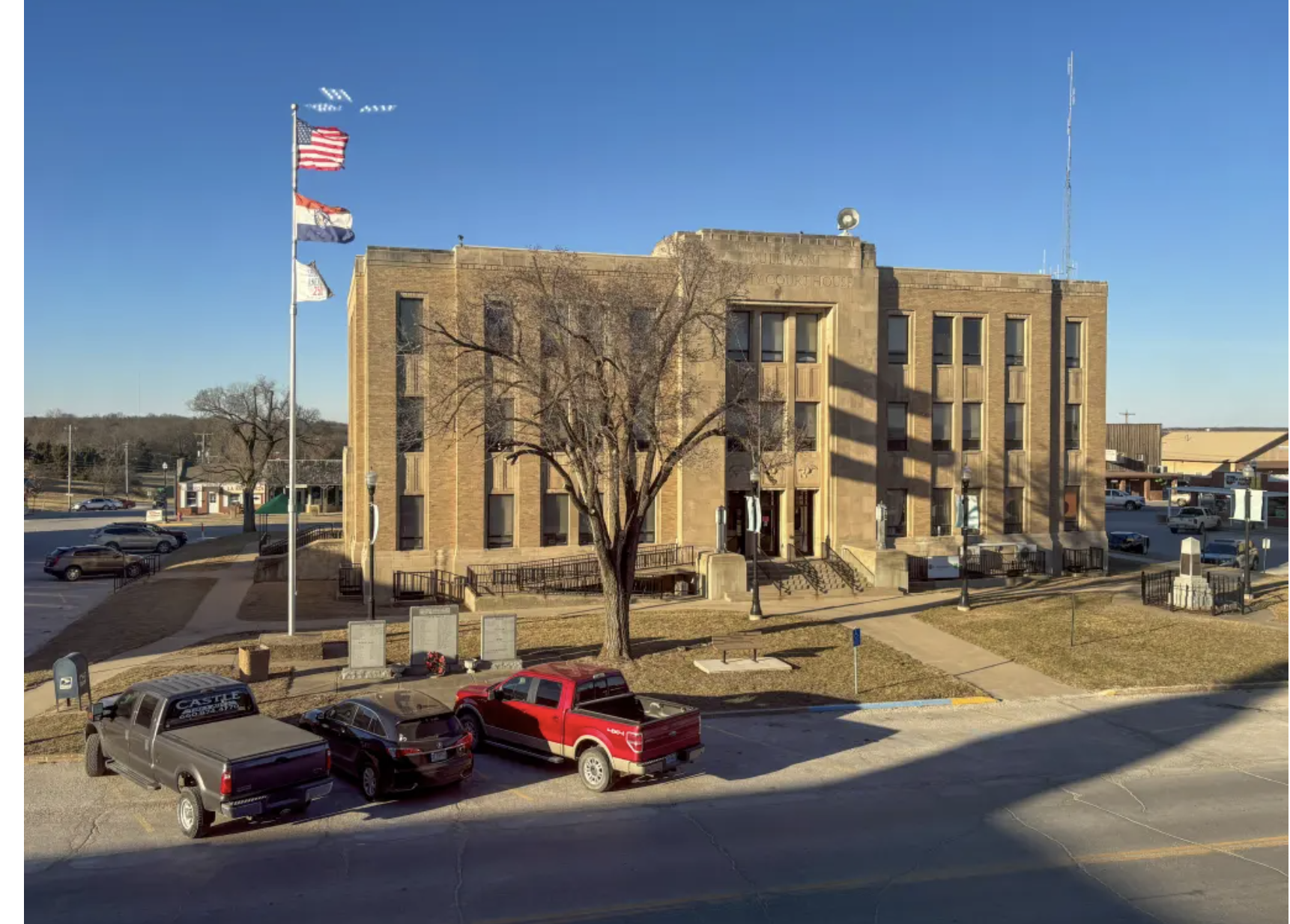
At the center of Milan is the courthouse. On the surrounding four blocks, at least one business on each corner is tied to the town’s Latino community.
“It’s very, very difficult,” said an immigrant from Guatemala who has lived in Milan for nearly two decades. “It makes my stomach turn to think that you keep fighting and fighting, and the problems don’t go away.”
The woman, who asked not to be identified for fear of her immigration status, owns a restaurant and a small grocery store that operate out of the same space. She said she started her own business so she would not have to rely on false documents to work and so she could contribute to the town’s economy.
She said fear in the community over current immigration policies has hurt her business.
“They’re pushing us into a corner,” she said. “You feel like sooner or later, it’s your turn.”
On a good day, she said, she used to make about $1,000. Now, her sales can sometimes drop to around $100.
She also operates a money-transfer service. She said weekly money transfers, called remittances, once reached about $40,000 but dropped to roughly $6,000 in the last week of February.
She said the decline in sales began in 2025 and has forced her to reduce inventory. She used to travel to Kansas four or five times a month to restock products. Now she goes twice, sometimes only once.
At another store in downtown Milan, money-transfer services have dropped by about half. The owner said she now carries about 15% of the goods she once stocked.
“You can’t start rounding up and deporting people, and terrorizing, and getting people to self-deport, when they make up about 20% of the workforce without expecting major negative impacts on the economy,” said Daniel Costa, director of immigration law and policy research at the Economic Policy Institute, a Washington-based think tank.
Meat and poultry processing employs about 560,000 workers nationwide, with a combined payroll of $30 billion, underscoring how deeply local economies depend on the industry, according to the Economic Policy Institute.
The economic effects extend beyond daily routines and local businesses.
Another woman, who also asked not to be identified because of her immigration status, said fear has reshaped even the most routine parts of her family’s life.
She avoids going to Walmart on weekends, she said, because the nearest store is a 45-minute drive — and she worries she could be stopped along the way.
She has two children, ages 7 and 9. The younger child is autistic. Weekend outings, once a regular activity, have largely stopped. The family used to go to Pizza Hut, something the children looked forward to.
Her older daughter has begun to grasp the situation.
“She says that when she grows up, she hopes she’ll be able to fix our papers so we don’t have to live with this fear all the time,” the woman said.
Affholter, the Kraft Heinz employee temporarily held in Milan, has lived in the U.S. for roughly two-thirds of his life. But the possibility of being stopped on the street because of his appearance has made him question his place in a country he considers his own.
“What I am experiencing now is not normal. I can’t accept that this is normal,” he said. “Because that’s not the America I know.”
Asked what he meant, he paused.
“That we are all equal,” he said. “That we are all free. No matter your roots, no matter your color, no matter what language you speak.”
This article first appeared on Investigate Midwest and is republished here under a Creative Commons Attribution-NoDerivatives 4.0 International License.