


A House-Senate conference committee agreed to boost childcare subsidies and the private school voucher program and rejected an overhaul of higher education funding. Final votes are expected Wednesday
BY: RUDI KELLER
Missouri Independent
There are no increases in basic state aid to public schools or higher education in the compromise Missouri budget worked out Monday in a day-long conference.
As a result, lawmakers will not fund the $190 million cost of a 2024 education law as requested by the Department of Elementary and Secondary Education. For community colleges and state universities, it means no abrupt change to a plan that allocates funding based on enrollment, which would have cut some schools by 40% or more.
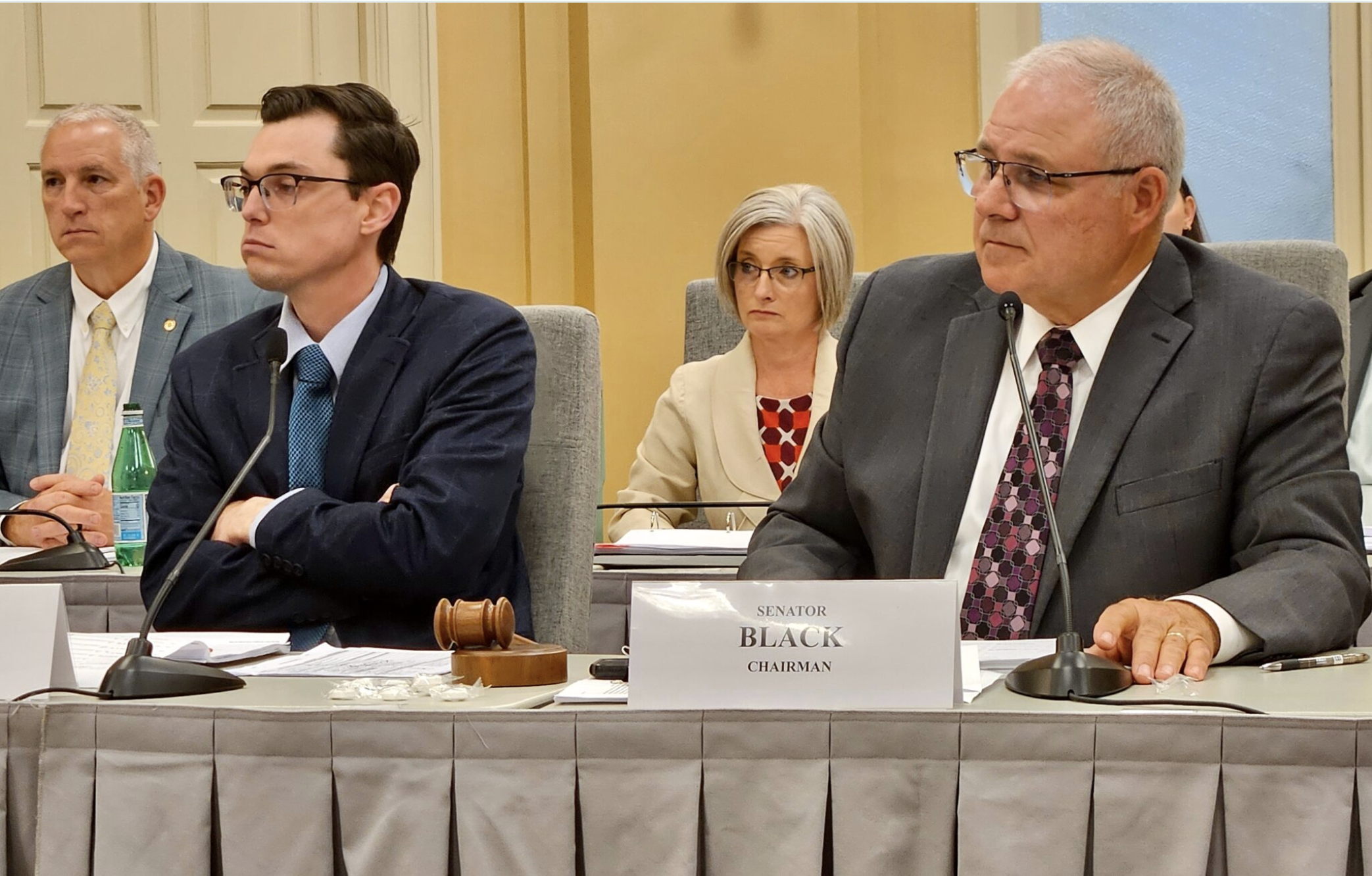
Over about six hours of work, House Budget Committee Chairman Dirk Deaton and Senate Appropriations Committee Chairman Rusty Black told other lawmakers assigned to negotiate the differences what had been worked out in private before they met. Their decisions were accepted, in the main, and rarely changed when challenged.
Final figures were not available late Monday, but the final spending plan for the fiscal year starting July 1 will fall between the $50.8 billion in total spending approved in the Senate and the $52.4 billion approved in the House. General revenue spending will be about $16 billion, requiring up to $2.4 billion from surpluses accumulated between 2021 and 2023 to cover the deficit to expected revenue.
In his January budget message, Republican Gov. Mike Kehoe asked for $54.5 billion in total spending and $16.3 billion in general revenue appropriations.
“We are still well below what the governor proposed,” Deaton said after the budget work was finished.
The general revenue fund balance, which once stood at $5.7 billion, was down to $2.9 billion at the end of April and is expected to be all but exhausted by the end of the coming fiscal year.
Deaton and Black said after the meeting that they expect final votes on Wednesday, two days ahead of the constitutional deadline to pass spending bills.
Major elements of the final budget include:
- Restoration of child care subsidy increases sought by Kehoe and cut in the Missouri House.
- Reversal of cuts to services for adults with developmental disabilities proposed by Kehoe.
- No general cost of living pay increase for state employees for the first time since fiscal 2021. There is a retention increase of 1% for each two years on the job for state workers on their employment anniversaries.
- Shifting technology jobs from the Office of Administration to the Department of Social Services to give it direct responsibility for implementing federal changes in safety net programs such as food stamps and Medicaid.
- A $10 million increase — to $60 million — for the MOScholars tuition vouchers for students attending religious and other private schools.
- Finding an alternative to a trouble-plagued accounting system that had been intended to replace all financial jobs in state government from payroll to purchasing to writing budget bills.
The committee’s work began with public school funding and ended with a debate over the boost for voucher funding.
Education spending
The foundation formula, the main program for supporting public schools, would receive the same appropriation in the coming year, $4.3 billion, as the lawmakers approved for this year. But differences in the way each chamber funded that amount gave Democrats an opportunity to argue that the $190 million to fully fund it as state law indicates was available.
The House used $64 million from surplus money in the Blind Pension Fund to replace general revenue and the Senate did not. The Senate plan used $118 million that the House did not touch, from money set aside for work on the Capitol Building.
“Here’s an opportunity here to be able to do both,” said state Sen. Maggie Nurrenbern, a Democrat from Kansas City. “And so I would just ask that the conference committee really consider that if we can do both.”
The deal worked out by Deaton and Black trimmed the amounts from each fund and included a rosier forecast for Missouri Lottery revenues than the Senate budget plan used.
Adding money the schools may not get because of vetoes or shortfalls in the funding source would be adding “maybe money” to the budget, Black said.
“I will get criticized just as much over the fact that we put maybe money out there,” Black said.
If lottery revenue is more than expected, it can be given to schools in a supplemental spending bill next year or it could be saved for future years, Black said.
“Being at a point now where we can’t fund those things, I don’t see it as a horrible thing because when it does turn the other way, that money is going to be there,” Black said.
The House plan for higher education would have put $184 million of community college funding and approximately $820 million in support for four-year universities into pools that would be redivided based on the number of students at each institution.
Truman State University in Kirksville would have seen its funding cut by more than half, to $23.8 million from $50.9 million. Harris-Stowe State University in St. Louis and Lincoln University in Jefferson City, the four-year schools receiving the smallest current amounts, would each have had their core funding cut by almost 40%.
While the House funding plan didn’t survive, the idea did. The committee attached language to the budget directing the Department of Higher Education and Workforce Development to present a formula for reallocating state funds by Dec. 1.
Directing the department to write a formula doesn’t mean it will be used, Black said.
“Giving us recommendations, giving the governor staff’s recommendation doesn’t mean that something gets done,” Black said. “There’s many times I would like to see something done and it doesn’t get done, even when I asked for a recommendation.”
The MOScholars program ended the day’s debate because it is funded through the state treasurer’s office, which, along with other elected officials and the Legislature, is funded last. The extra $10 million is one of the few large discretionary increases in the budget this year. Most Democrats on the conference committee wanted it removed.
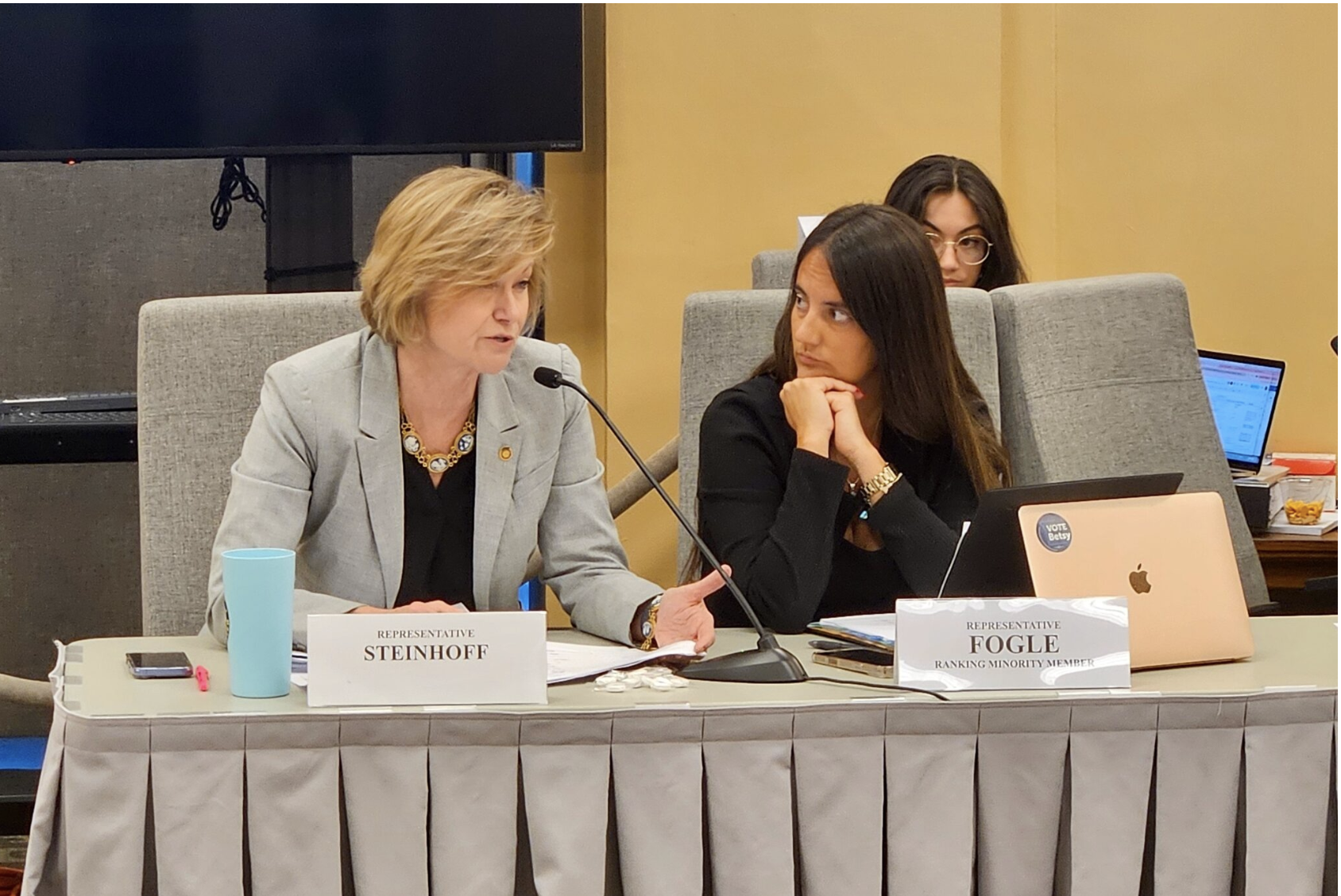
“I am perpetually and continually concerned about this march toward privatization,” said state Rep. Betsy Fogle, a Springfield Democrat.
But the committee included one of the few Democrats who supports the program, state Rep. Marlene Terry of St. Louis. The program provides opportunities for students who couldn’t afford a private education, she said.
“If I had my way, I would ask for more than $10 million,” she said.
Childcare funding
The budget would restore $51.5 million in cuts to the state’s childcare subsidy program proposed by the House, allowing providers to receive payments based on enrollment but without shifting those payments to the beginning of each month.
There would be limits on the payments based on enrollment. Children approved to attend 20 or more days per month could miss no more than 10 days and children authorized for 19 or fewer days could be absent no more than six days.
Democrats accused Republicans of breaking fellow Republican Kehoe’s promise to allow payments to be made in advance each month.
Fogle urged her colleagues to strike language preventing prospective payments without attendance requirements.
“I do not like banning the ability for the department to make good on the governor’s promise,” Fogle said.
Black said federal policy bars advance payments.
The restored money allows for extra “rate enhancements” providers receive for pursuing accreditation, serving children with special needs or predominantly low-income families.
Lawmakers discussed language that would direct the department to work with stakeholders to make potential adjustments to these additional payments.
Black told colleagues the language came from lobbyists for childcare providers.
“They as a whole, I would say, agree that it will be better for [providers] to make the decisions than for you and I to make the decisions if there can be changes there,” Black said.
But Fogle argued that lawmakers had put providers in a difficult position by threatening cuts.
“We are hamstringing the childcare industry, and it makes sense to me that they’re coming and advocating for some of these changes,” Fogle said. “But it’s because we put them in a position that they have to take the better of two bad options.”
IT changes
The budget would transfer $57 million and 168 employees from the Office of Administration’s statewide IT team to the Department of Social Services to make the department solely responsible for implementing federal changes to welfare programs mandated by Congress.
“With those deadlines, we determined that it would be best to put that IT development in the department, where they have the most to gain but without a doubt the most to lose if that IT is not successful,” Black said during Senate debate on the budget last month.
The federal law eliminated an option for the U.S. Centers for Medicare and Medicaid to waive penalties for the state’s Medicaid error rate. Missouri could face a federal clawback of $1.2 billion if the state doesn’t decrease its error rate below 3% starting in October 2029.
The remaining IT effort in the Office of Administration would be given a directive to appoint a Chief Innovation and Technology Officer and prepare “a comprehensive plan engaging a qualified third-party independent vendor” to provide cloud computing services.
The directive, included in the Senate version of the budget, drew bipartisan questioning.
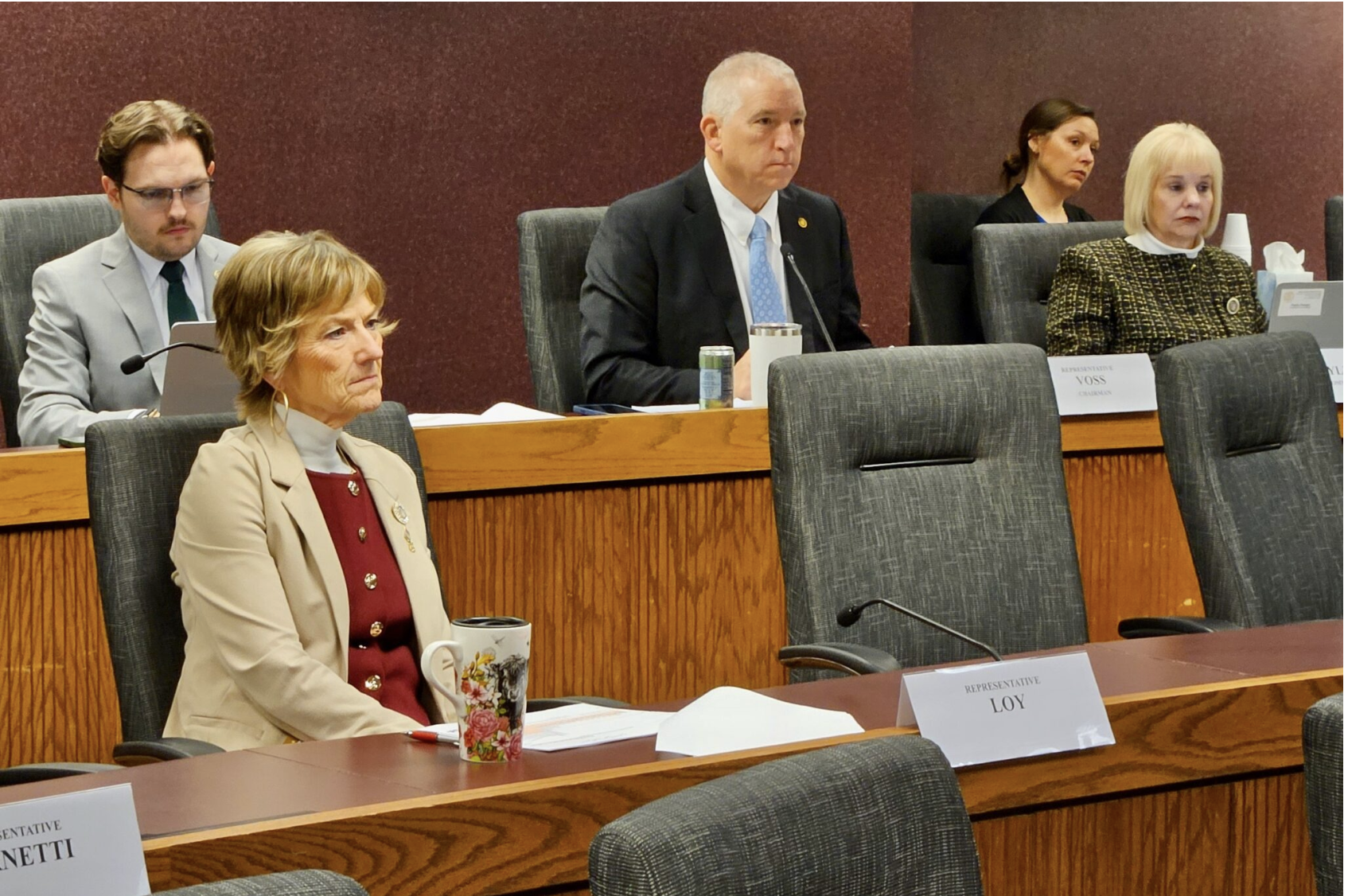
Republican state Rep. John Voss of Cape Girardeau, who chairs the House appropriations subcommittee on administration, said he’s held extensive hearings on the state’s IT needs.
The idea has never been broached in the committee by the current IT staff leaders, he said.
“I am concerned about asking for a specific outcome of moving to the cloud when no other state has done that,” Voss said.
He also questioned the cost.
“When there is a steady demand for a service, that is when it is most cost-effective to keep it in house,” Voss said.
Some members said they suspected the language is written to fit a particular vendor.
“Anybody can correct me if I’m wrong, but I feel like this is literally picking Google over everybody else,” Nurrenbern said.
Black said no vendor has been pre-selected or has an advantage.
“You read it that I’m trying to, not say the word ‘cheat,’ but put my thumb on the scales to help someone,” Black said. “That’s not accurate.”