


The budget uses $2.3 billion from the general revenue surplus to cover a deficit to revenue. It is likely the last time that much extra money will be available to balance the budget
BY: RUDI KELLER
Missouri Independent
A last-minute fight over public school funding Wednesday almost derailed final Missouri state budget votes as Democrats, with some Republican allies, questioned whether some funds dedicated to education will be available in the coming year.
The debate centered on whether the budget relies too heavily on a good year from the Missouri Lottery.
Education budgets in the current fiscal year, which ends June 30, were written on an assumption the lottery would produce $410 million while the actual net from ticket sales will be about $350 million. As a result, schools are not receiving about $245 per student that they anticipated when the budget was written.
For the coming year, the budget plan anticipates $369 million from the lottery.
The 16 spending bills sent to Republican Gov. Mike Kehoe’s desk by votes in the House and Senate appropriate $50.7 billion for fiscal 2027, which begins July 1. The spending plan covers a $2.3 billion deficit in the $15.9 billion general revenue budget by drawing on surpluses accumulated from 2021 to 2023.
The budget allocates $48.7 billion to state government operations in the coming year, with another $2 billion appropriated for construction and building maintenance.
The Constitution makes education the top priority for spending after the state pays its debts. The budget approved Wednesday allocates $4.3 million to the foundation formula, the state’s basic aid program for public schools. The issue that created the problem Wednesday is where that money comes from.
A last-minute fight over public school funding Wednesday almost derailed final Missouri state budget votes as Democrats, with some Republican allies, questioned whether some funds dedicated to education will be available in the coming year.
The debate centered on whether the budget relies too heavily on a good year from the Missouri Lottery.
Education budgets in the current fiscal year, which ends June 30, were written on an assumption the lottery would produce $410 million while the actual net from ticket sales will be about $350 million. As a result, schools are not receiving about $245 per student that they anticipated when the budget was written.
For the coming year, the budget plan anticipates $369 million from the lottery.
The 16 spending bills sent to Republican Gov. Mike Kehoe’s desk by votes in the House and Senate appropriate $50.7 billion for fiscal 2027, which begins July 1. The spending plan covers a $2.3 billion deficit in the $15.9 billion general revenue budget by drawing on surpluses accumulated from 2021 to 2023.
The budget allocates $48.7 billion to state government operations in the coming year, with another $2 billion appropriated for construction and building maintenance.
The Constitution makes education the top priority for spending after the state pays its debts. The budget approved Wednesday allocates $4.3 million to the foundation formula, the state’s basic aid program for public schools. The issue that created the problem Wednesday is where that money comes from.
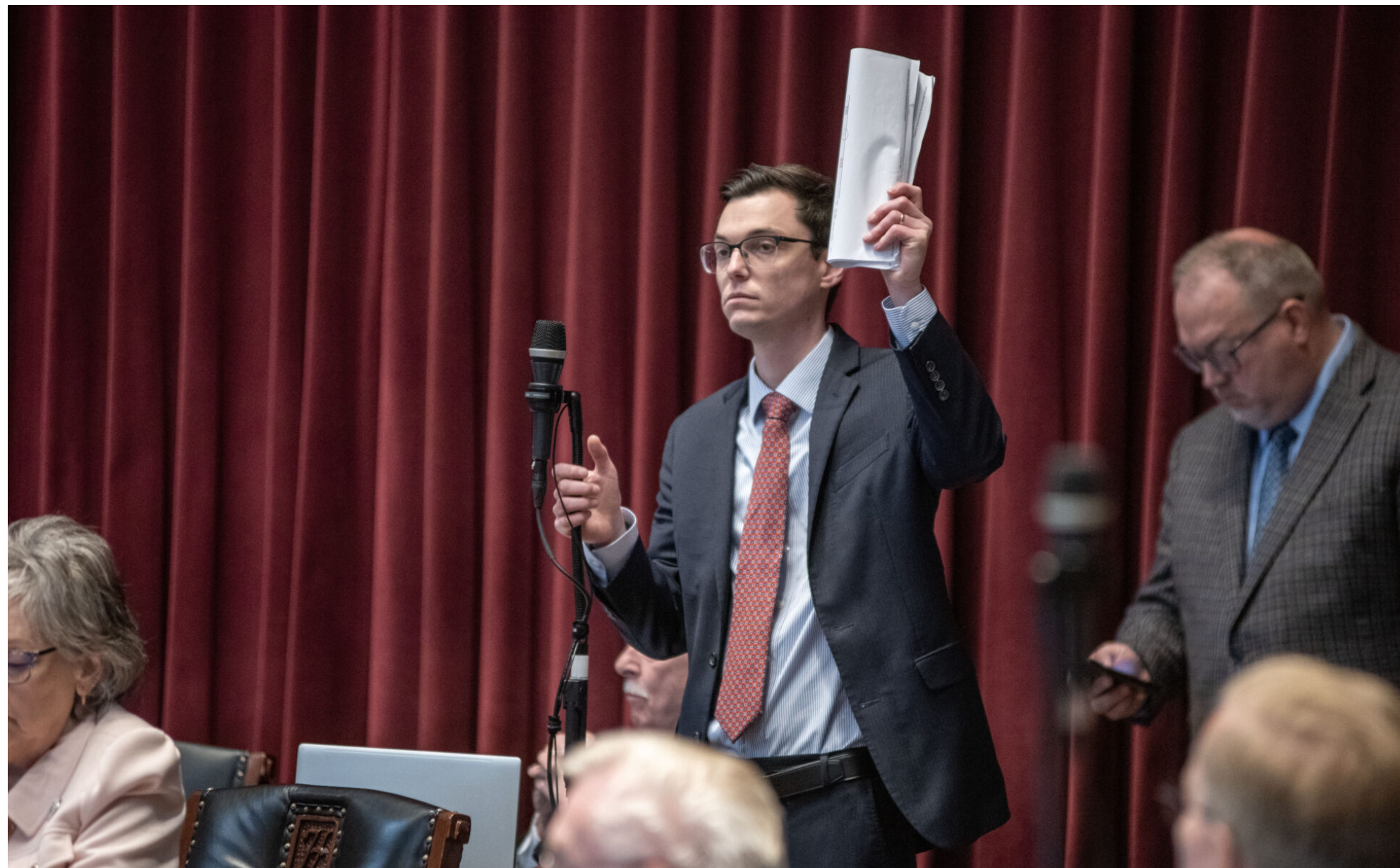
In the Missouri House, state Rep. Betsy Fogle, a Democrat from Springfield, tried to send the bill with foundation formula spending back to a conference committee that met Monday to settle differences between the House and state Senate in the spending bills.
She said that she was misled at the conclusion of negotiations by assurances that all the money dedicated to the foundation formula was going to be available in the coming year. It was only later, she said, that she learned that the lottery funding was uncertain.
“I feel frustrated that that information was not correct,” Fogle said.
House Budget Committee Chairman Dirk Deaton, a Republican from Seneca, said he was not concerned about the lottery projection. Every item in the budget is based on revenue expectations that may or may not be met, he said.
“This is how it works,” Deaton said. “They’re all projections.”
The House defeated the motion to return the bill to the conference committee, but with 16 Republicans joining Democrats.
When the bill came up for a final vote, it passed 83-68, receiving just one more vote than the minimum needed to pass as 22 Republicans joined Democrats in opposition.
The final figures from the conference committee showed the lottery is being asked to provide as much as $45 million more than is likely without a substantial increase in ticket sales.
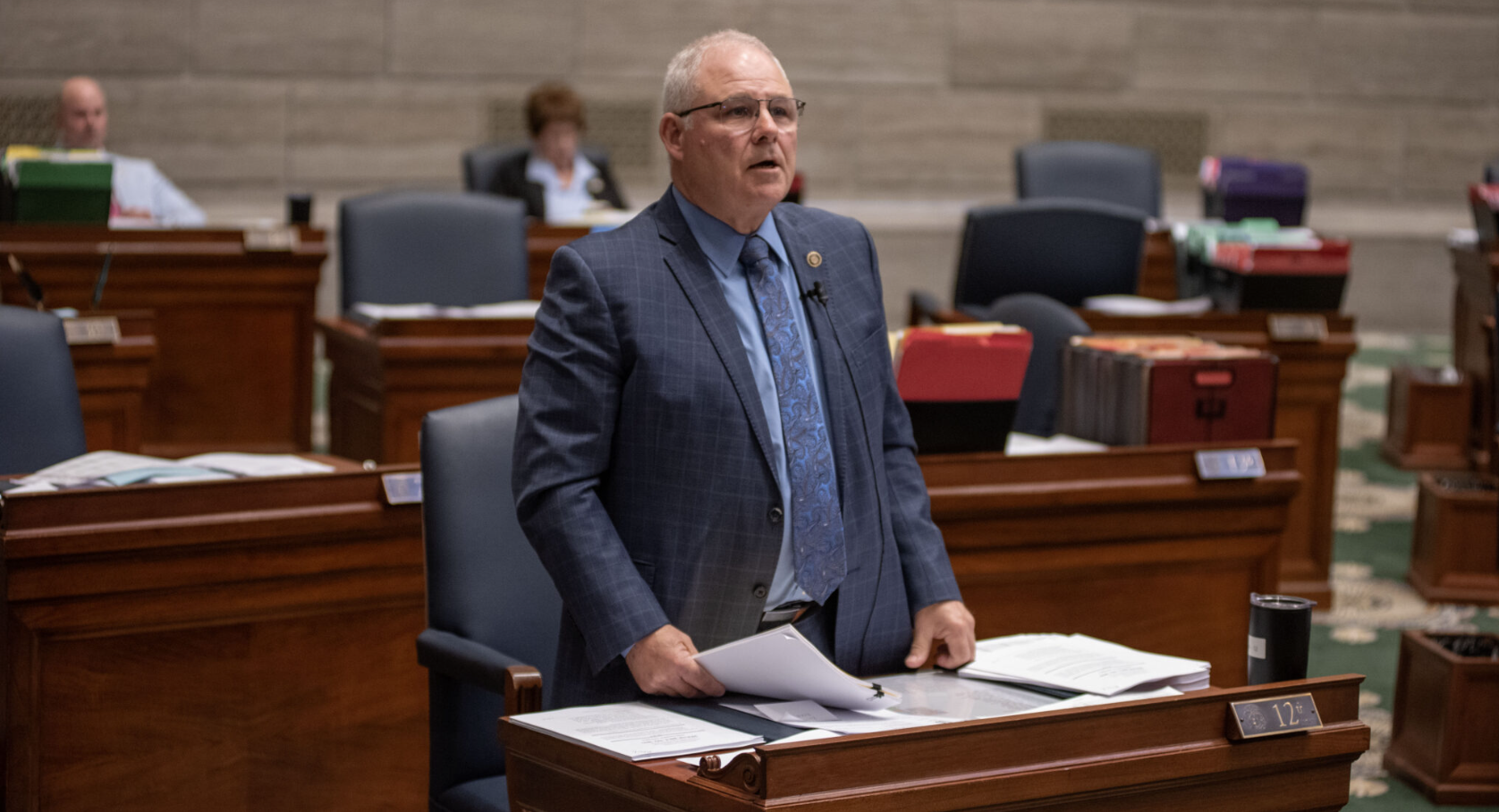
While the House debated, the state Senate was at work on bills setting construction spending for the coming fiscal year. Senate Appropriations Chairman Rusty Black, a Republican from Chillicothe, added a $27 million appropriation for the foundation formula to one of the bills to make up part of money that could be withheld by Kehoe if the lottery does not produce the expected money.
Black said he also feels he was misled by assurances from Deaton.
“I feel like maybe I was taken advantage of,” Black said. “Of course, there are people now that think I’m a liar, and we’ll just all have to figure out when I get a chance to go to St. Peter’s Gate, what’s true and what’s not.”
In a discussion with state Sen. Lincoln Hough, a Springfield Republican, Black was more direct about the result of the negotiations.
“Senator, you got this wrong,” Hough said.
“Yes I did,” he said.
Major budget issues
Where to find the money to pay for everything in the $50.7 billion budget was one of the biggest questions of the session. At one point, the Senate budget plan drew more than $200 million from the $600 million in general revenue set aside in 2022 and 2023 for expansion and renovations of the Capitol Building.
That number was reduced to around $100 million that will be spent on state operations, including $89 million used for public schools. Another $120 million is being used in the construction budget, with more than $104 million dedicated to renovations in the Capitol and $15 million directed to a parking garage for a new hotel and convention complex in Jefferson City.
Other major budget issues included:
- Childcare funding, where the House budget proposal cut $51.5 million in funding agencies that serve low-income and foster families. The money was restored in the Senate and maintained in the final budget and will allow providers to be paid based on their enrollment numbers rather than on the daily attendance of children in their care.
- Medicaid expansion, the program that provides medical care for lower income adults of working age. In the four years that the voter-mandated program has been set aside in a separate line item, lawmakers have appropriated $13.5 billion and the number of people covered has grown to more than 363,000. The program required general revenue for the first time this year, money included in the supplemental spending bill passed in March. The budget approved Wednesday uses $395.3 million of general revenue for the state’s share of the projected total cost of $5.2 billion.
- Adults with developmental disabilities services were slated for an $80.7 million cut by Kehoe. The cut faced bipartisan pushback, and, aided by a massive turnout at a Capitol rally, the money was restored.
- Naloxone distribution programs were penciled in for a $5 million cut by the House but the money was restored by the Senate and retained in the final budget.
- The payments for problem-plagued new accounting system known as MOVERS were cut about 20%, and money was set aside to maintain the system it was intended to replace.
- A higher education funding overhaul approved in the House, intended to tie state support for colleges and universities, was reversed but the Department of Higher Education and Workforce Development was directed to devise a formula for distributing the funds by Dec. 1.
- Earmarks identified by The Independent, which totaled 151 in the budgets drawn up by each chamber, were reduced to 132 in the final budget at a cost of $304 million, including $134.3 million of general revenue. During Monday’s conference committee meeting, 19 were deleted, including two for St. Louis County organizations that became a political issue between state Sens. Brian Williams, a University City Democrat, and Angela Mosley, a Democrat from Florissant. Williams and Mosley are candidates in the August Democratic primary for St. Louis County executive.
Future budgets
As they worked through Kehoe’s budget proposal, lawmakers reduced the deficit between general revenue tax receipts and projected spending by almost $375 million. That was only a fraction of the difference, however, and closing the gap will be left for lawmakers in future legislative sessions.
In December, Republican State Auditor Scott Fitzpatrick warned Missouri was approaching a fiscal cliff if Kehoe and lawmakers didn’t curb deficit spending from the surplus.
The budget sent to Kehoe’s desk would spend $15.9 billion from the general revenue fund, while the revenue estimate made in December projects tax receipts will total $13.6 billion.
If Kehoe makes no cuts to spending approved by lawmakers, the general revenue fund balance, which stood at $2.9 billion on April 30, will be reduced to about $600 million by the end of June 2027.
Deaton, who is leaving office due to term limits, said at a news conference before the House budget votes that he’s comfortable leaving it to future lawmakers to close the gap.
“This is a fiscally responsible budget (for) fiscal year 2027,” Deaton said. “Fiscal years 2028, 2029 as you go forward, those are going to have to be looked at individually, and they might have to make different decisions.”
Democrats, who at various times criticized the budget decisions made by majority Republicans, said the issue of future deficits is a self-inflicted problem. Republicans have pushed through irresponsible tax cuts, Fogle said at a news conference after House action on the budget.
“We felt pain this year in the budget room,” Fogle said. “Subsequent General Assemblies are going to feel even more, with continued conversations about the elimination of the income tax and no guarantees that those will be revenue neutral.”
Not every appropriated dollar is spent, and construction projects can spread over several years. Lawmakers appropriated $15.3 billion from general revenue in fiscal 2025, which ended June 30, while actual spending totaled $14.1 billion.
Missouri cannot borrow money to cover shortfalls in operating funds. The Constitution directs the governor to control spending if revenue is not enough to pay all appropriations.
“We might be drawing down from reserves,” Deaton said, “but once, and if, that is exhausted, then this thing will work out, because you can’t spend money you don’t have.”